If you've been using Claude through third-party tools lately, you've probably noticed something changed. What used to be a straightforward integration now requires jumping through hoops — or has stopped working entirely. Anthropic has tightened the reins on how their models can be accessed, and the developer community is feeling the impact.
Here's the thing though: there's still a clean path to Claude that doesn't require wrestling with API keys, separate billing, or rate limits. It's called GitHub Copilot, and it works because Microsoft negotiated access on your behalf. Let me walk you through what happened, why it matters, and how to keep using Claude without the headache.
What Anthropic Changed
Anthropic has fundamentally restructured how third-party access to Claude works, and the changes are significant:
- Direct API access now requires separate setup: Even if you already pay for Claude Pro, Max, Team, or Enterprise, your subscription does NOT include API access. To use Claude via API, you need to create a separate account in the Claude Console, generate an API key, and set up entirely separate billing.
- Third-party tools are affected: Tools like OpenClaw, Continue.dev, and other developer-focused integrations that relied on Claude's API now require users to supply their own Anthropic API key. Previously, some of these tools offered shared or simplified access — that's gone now.
- Community workarounds are cut off: Unofficial paths and shared access patterns that developers used to circumvent API key requirements have been systematically closed. Anthropic is enforcing a strict, authenticated, per-user billing model.
- Usage-based pricing is mandatory: API access is billed based on tokens consumed, not a flat monthly rate. This means costs can vary wildly depending on your usage, and it's on you to monitor and manage spending.
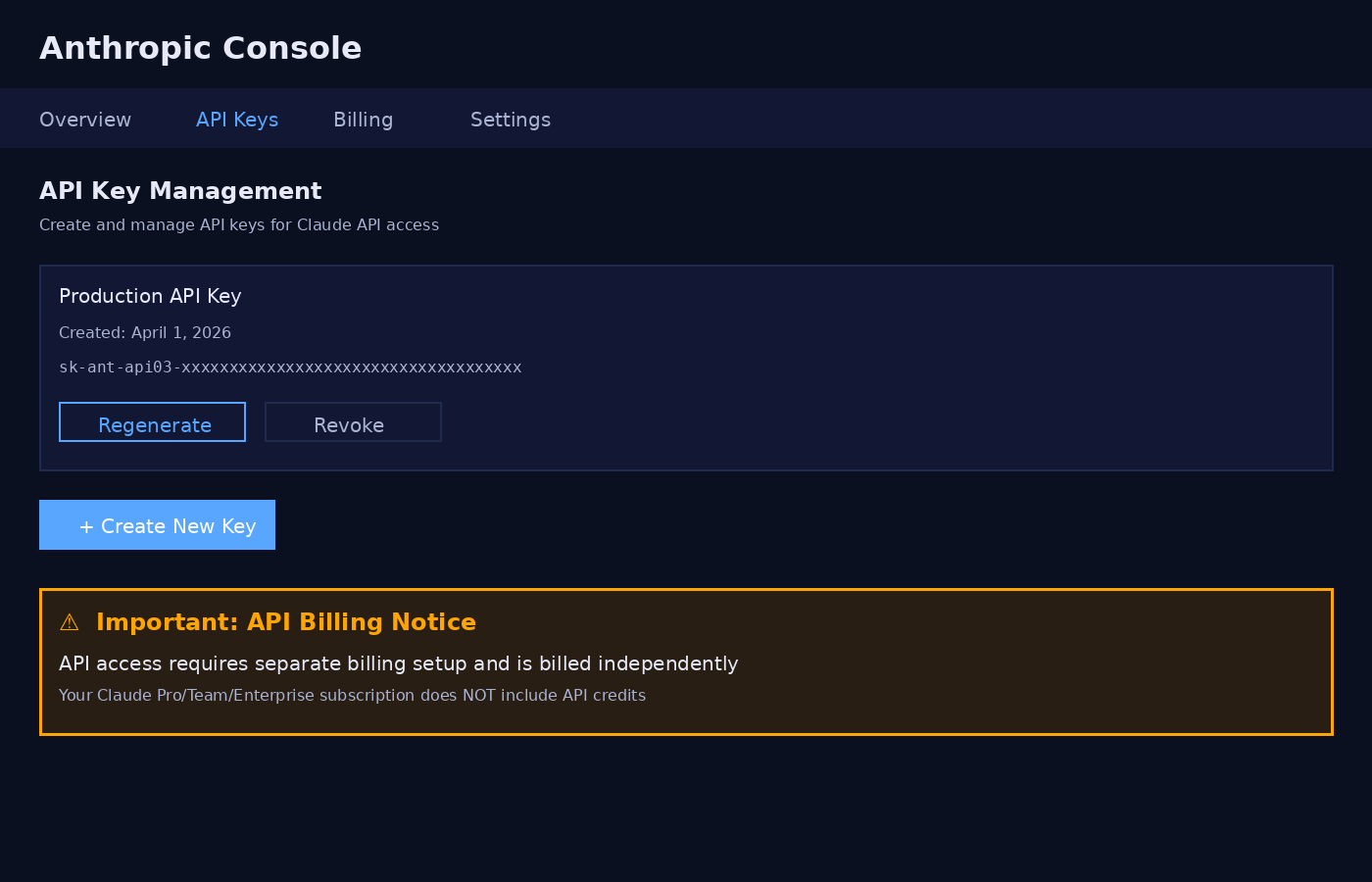
The bottom line: Anthropic wants direct control over who accesses Claude, how they access it, and what they pay. From a business perspective, this makes sense — they're monetizing API usage more aggressively. But from a developer experience perspective, it's disruptive. Tools that "just worked" now require configuration, credentials, and cost planning.
Why This Matters
For developers who've been using Claude through third-party tools, this shift creates friction in several ways:
- More accounts to manage: You already juggle GitHub, AWS, Azure, OpenAI, and a dozen other developer accounts. Now you need a separate Anthropic Console account just to access the API — even if you're already a paying Claude subscriber.
- Separate billing and cost tracking: API usage is billed independently, and token-based pricing means costs can spike unexpectedly. If you're not actively monitoring usage, you might get a surprise bill at the end of the month.
- Rate limits and quotas: API access comes with rate limits that vary based on your tier. Heavy users or teams can hit these limits quickly, leading to throttled requests or failed operations at the worst possible times.
- Tool compatibility: Not all third-party tools have updated to support the new authentication model cleanly. Some require manual configuration, others have deprecated Claude support entirely.
The ecosystem that developers relied on — where Claude was accessible through familiar tools with minimal friction — has been fundamentally disrupted. That's not inherently bad, but it does mean you need a new plan if you want to keep using Claude without the overhead.
GitHub Copilot: The Workaround That Still Works
Here's the good news: GitHub Copilot provides access to Anthropic's Claude models (including Claude Sonnet and other variants) through Microsoft and GitHub's enterprise agreement with Anthropic. This is a legitimate, supported integration — not a workaround or hack. And critically, it means you do NOT need a separate Anthropic API key or billing account to use Claude.
Why does this work when other paths don't?
- Microsoft negotiated access at scale: GitHub (owned by Microsoft) has a direct partnership with Anthropic. When you use Claude through Copilot, Microsoft handles the API key, billing, and rate limit negotiations on the backend. You just pay for Copilot.
- Single subscription, multiple models: GitHub Copilot gives you access to multiple AI models — including OpenAI GPT models and Anthropic Claude models — under one subscription. No juggling credentials or billing across providers.
- Tools can route through Copilot: Developer tools like OpenClaw support using GitHub Copilot as a backend. When you configure these tools to use Copilot instead of the Anthropic API directly, they route Claude requests through Microsoft's infrastructure, bypassing the need for your own Anthropic API key entirely.
Key takeaway: GitHub Copilot is the cleanest path to Claude for developers who don't want to manage separate Anthropic billing. It's a fully supported, first-class integration — and it still works.
How to Set This Up
Getting Claude access through GitHub Copilot is straightforward. Here's the step-by-step process:
Step 1: Subscribe to GitHub Copilot
You'll need an active GitHub Copilot subscription. GitHub offers both Individual and Business plans:
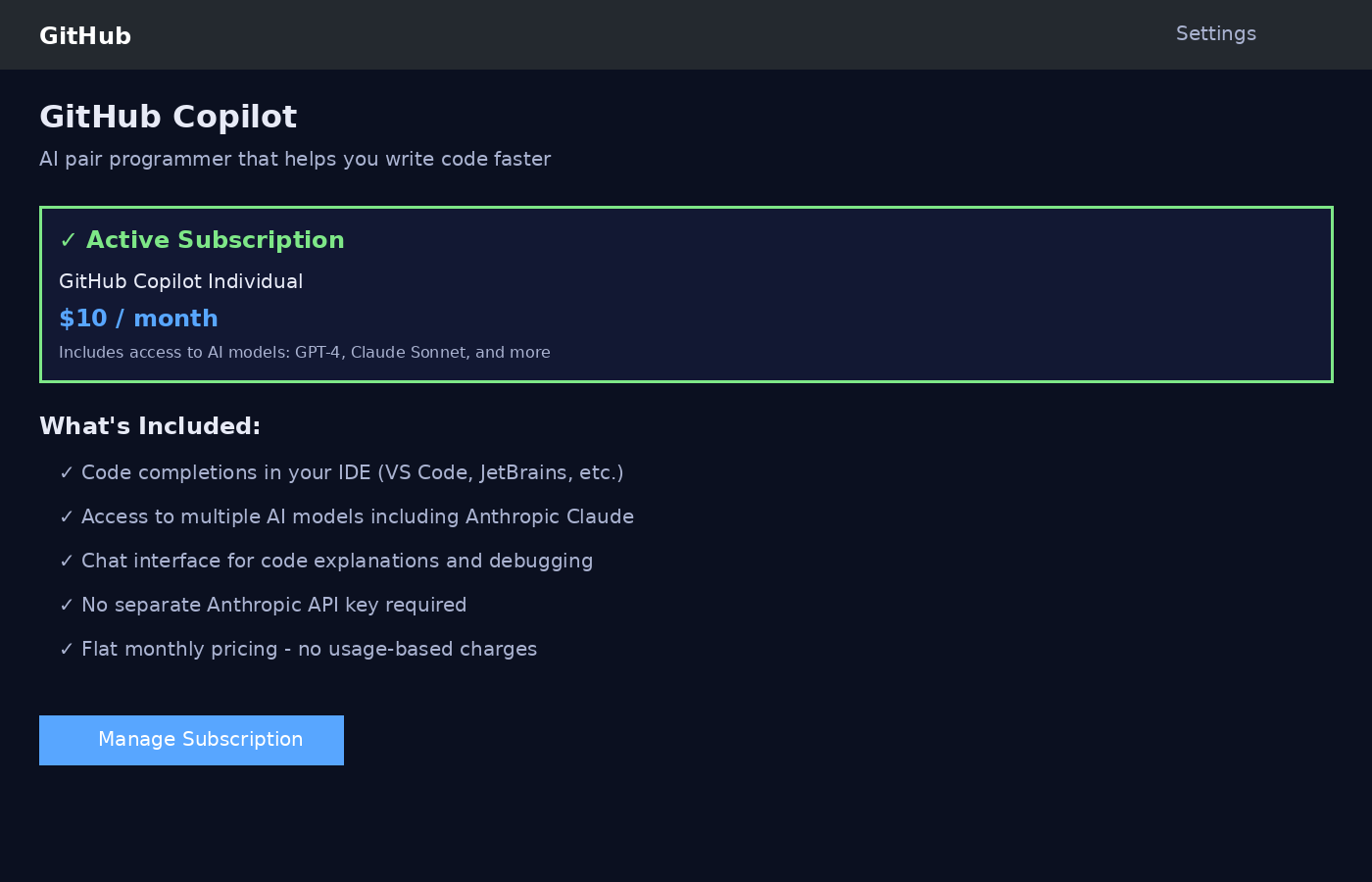
- Copilot Individual: $10/month or $100/year — includes access to AI models in supported tools and editors.
- Copilot Business: $19/user/month — includes everything in Individual plus enterprise features, policy controls, and organization-wide management.
To subscribe, head to github.com/settings/copilot and choose your plan. If you're already a Copilot subscriber, you're good to go — no additional steps needed here.
Step 2: Configure Your Tool to Use GitHub Copilot
Most modern developer tools that support Claude also support GitHub Copilot as a backend provider. For example, in OpenClaw (a popular AI assistant tool), you can configure the model provider to use GitHub Copilot instead of directly connecting to Anthropic's API.
Here's what that configuration typically looks like:
- Open your tool's settings or configuration panel (e.g., OpenClaw settings, Continue.dev settings, etc.)
- Look for the "Model Provider" or "Backend" section
- Select
GitHub CopilotorCopilotas the provider (instead of "Anthropic API" or "OpenAI API") - Choose your preferred Claude model from the dropdown (e.g., Claude Sonnet, Claude Opus, etc.)
- Authenticate with GitHub if prompted (this usually happens automatically if you're signed into GitHub in your browser)
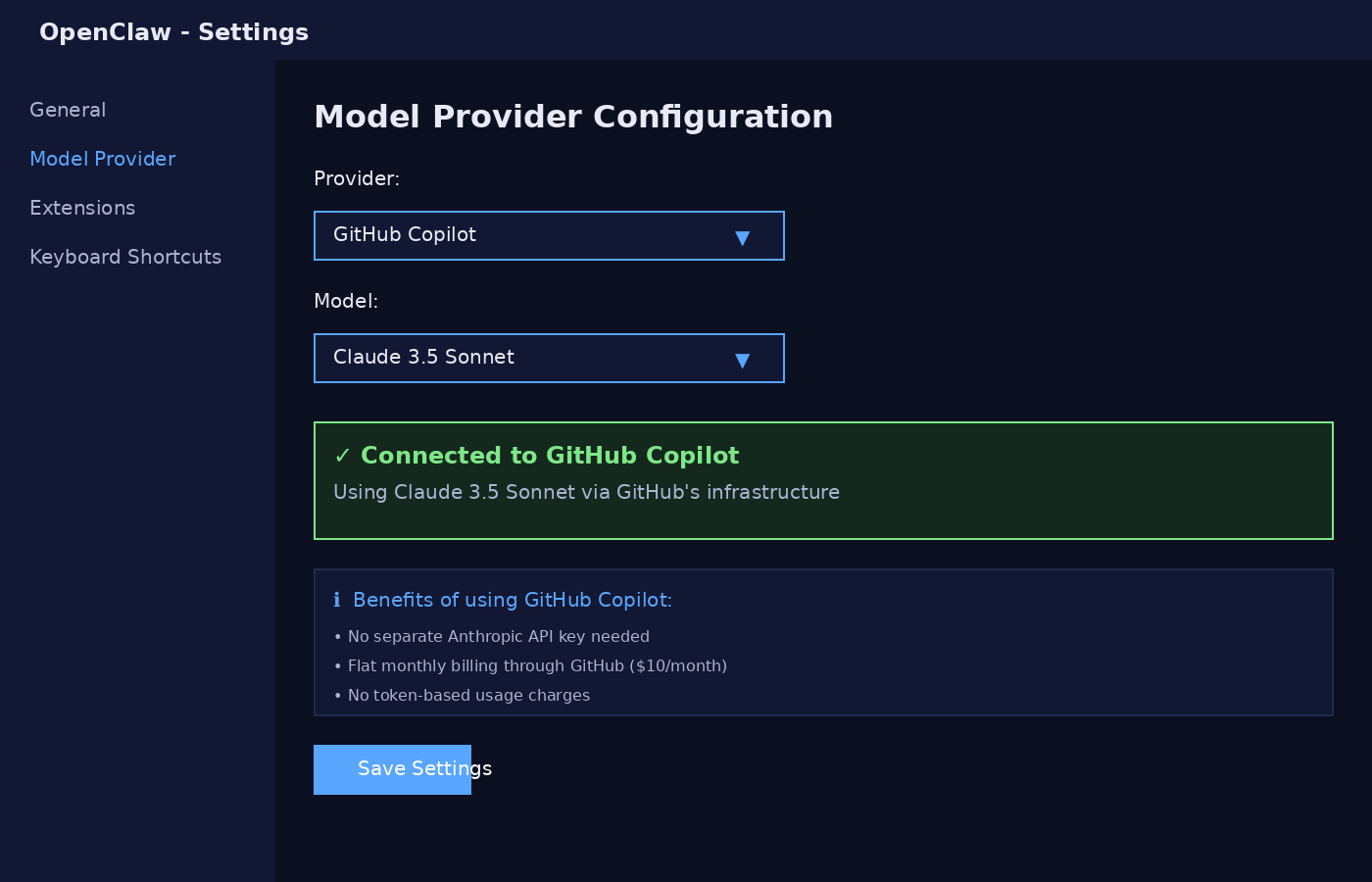
Once configured, your tool will route all Claude requests through GitHub Copilot's backend. You won't need to supply an Anthropic API key, set up separate billing, or manage rate limits — Copilot handles all of that.
Step 3: Verify Claude is Responding Through Copilot
To confirm everything is working, send a test query to Claude through your tool. You should see responses coming back normally. If you're using a tool like OpenClaw, it will typically indicate which model and provider is active in the UI (e.g., "Claude Sonnet via GitHub Copilot").
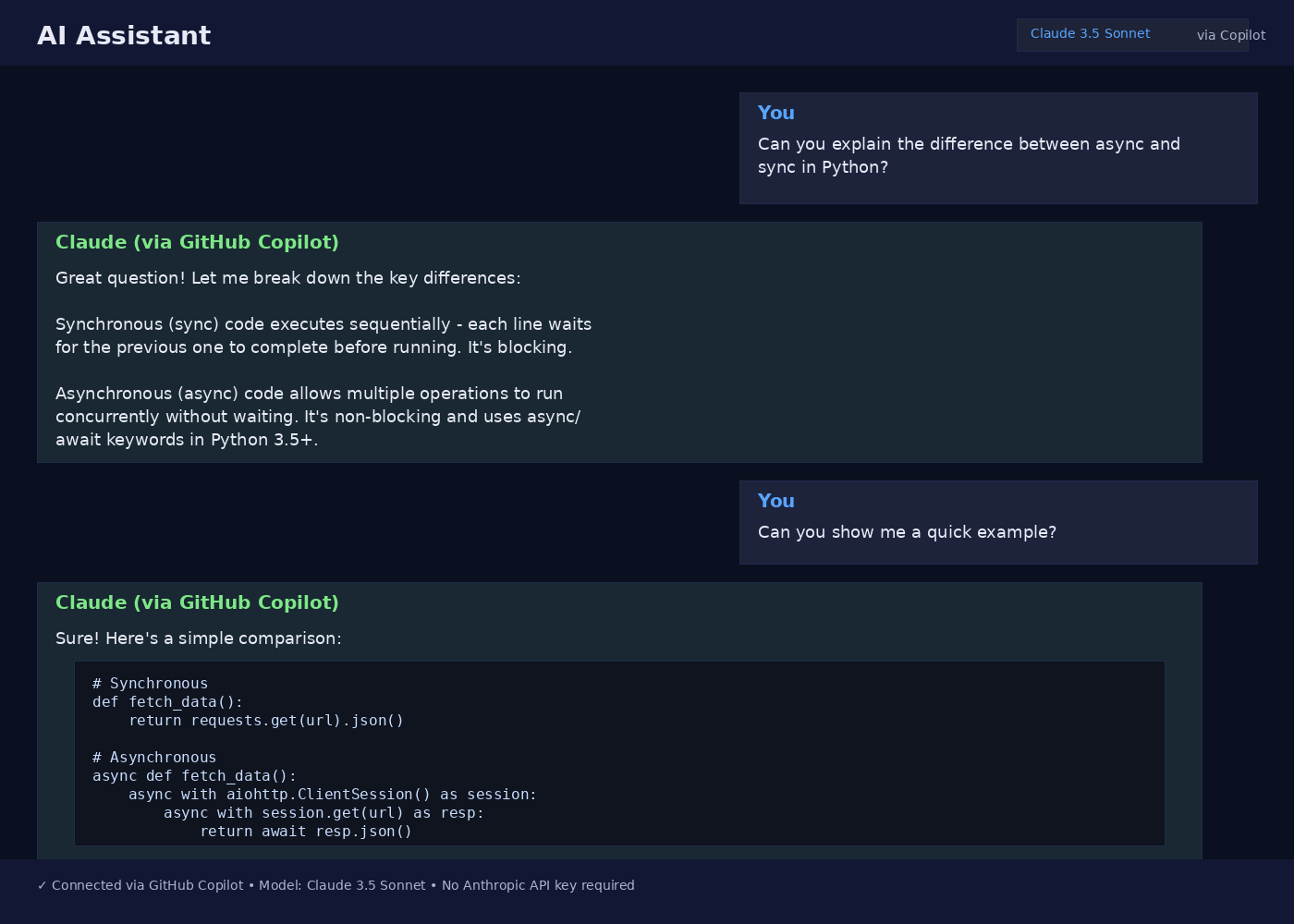
If you run into issues, check the following:
- Ensure your GitHub Copilot subscription is active and not expired
- Verify you're signed into GitHub in your browser or tool
- Restart your tool or IDE after changing the model provider setting
- Check the tool's documentation for Copilot-specific authentication steps
Why This Approach Makes Sense
Using GitHub Copilot to access Claude isn't a hack or a loophole — it's a first-class, supported integration that solves the exact problems Anthropic's changes introduced:
- No separate Anthropic account needed: You're already authenticated through GitHub. No new credentials to manage.
- Predictable billing: Copilot has flat monthly pricing. No surprise token-based charges at the end of the month.
- Rate limits managed for you: Microsoft handles rate limiting and capacity planning on the backend. You don't hit walls unexpectedly.
- Multiple models, one subscription: Copilot gives you access to both OpenAI and Anthropic models. You can switch between GPT-4, Claude Sonnet, and others without juggling API keys.
For most developers, this is simply the cleanest path forward. Anthropic's changes are understandable from a business perspective — they want control over monetization and usage — but they've created friction for the community. GitHub Copilot removes that friction entirely.
The Bigger Picture
Anthropic's move reflects a broader trend in the AI industry: providers are tightening control over how their models are accessed and monetized. OpenAI has done similar things in the past, and other providers will likely follow. The days of loose, unofficial integrations and shared API keys are ending. Going forward, expect more gatekeeping, more authentication, and more per-user billing.
That's not necessarily a bad thing — it makes the ecosystem more sustainable and predictable for providers. But it does mean developers need to be strategic about how they access AI models. Relying on direct API access means managing credentials, billing, and rate limits for every provider. Relying on aggregated platforms like GitHub Copilot means fewer moving parts, simpler billing, and better developer experience — at the cost of being tied to a specific platform.
For now, GitHub Copilot is the best bet for developers who want Claude without the overhead. It's supported, it's stable, and it works. If you're using OpenClaw, Continue.dev, or similar tools, switch your model provider to GitHub Copilot and you're good to go.
Summary
Anthropic's third-party access restrictions are disruptive, but they're not insurmountable. Here's the takeaway:
- Anthropic now requires separate API accounts, billing, and key management — even if you already pay for a Claude subscription
- Third-party tools that relied on simplified or shared access are affected and now require users to supply their own API keys
- GitHub Copilot provides access to Claude models through Microsoft's enterprise agreement with Anthropic, meaning you don't need a separate Anthropic API key or billing account
- Tools like OpenClaw can be configured to route Claude requests through GitHub Copilot, providing a clean, supported path forward
- For most developers, GitHub Copilot is the simplest, most reliable way to keep using Claude without friction
Anthropic locked the front door, but GitHub Copilot left a window open. Use it.